
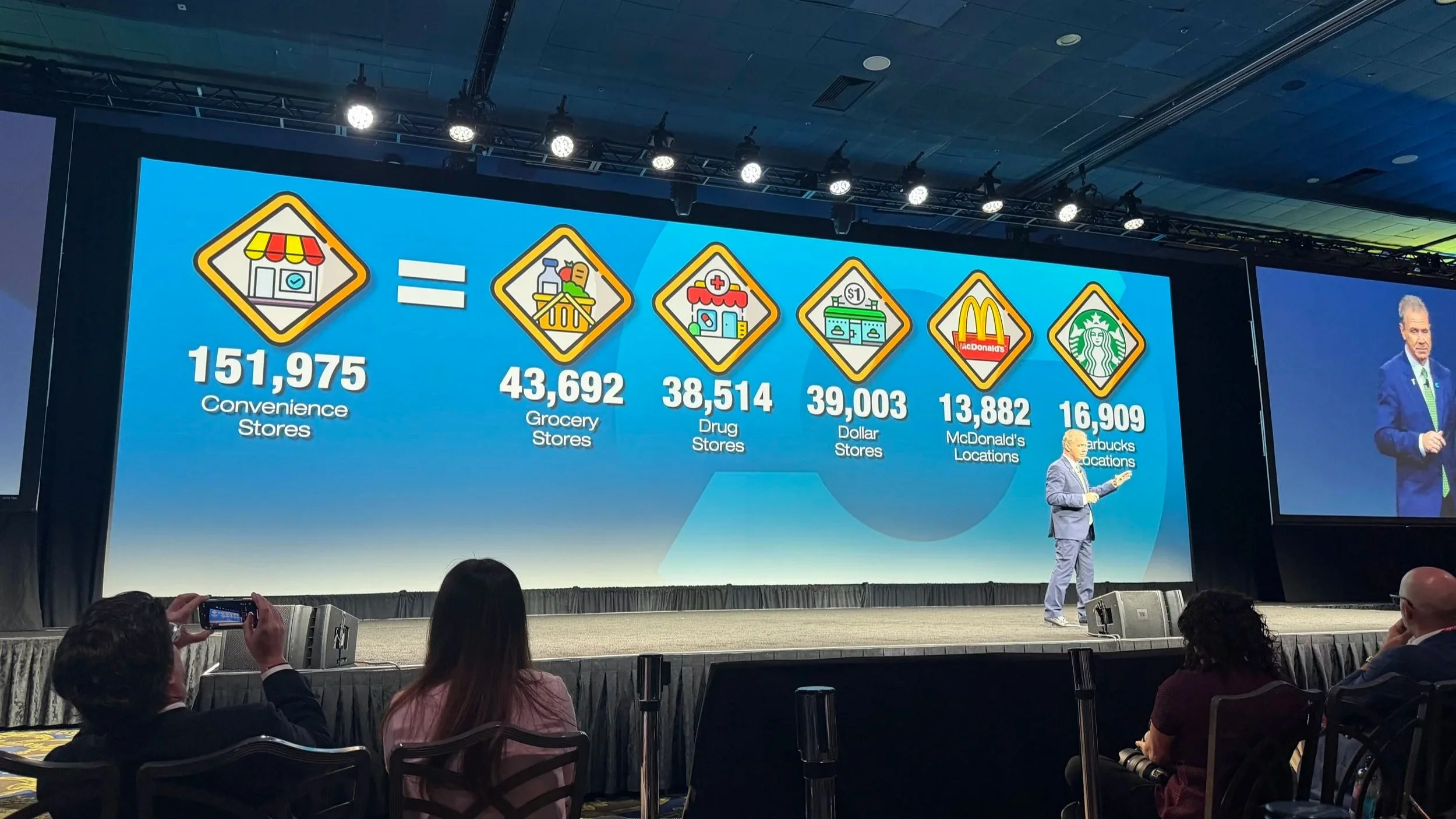
The most compelling message from this year’s NACS Show was not that convenience retail is changing. It was that the definition of “convenience” has already changed.
For years, the channel’s advantage was largely functional: a convenient location, fuel, fast transactions and the items customers needed in a hurry. Today, that is table stakes. Customers are deciding where to stop based on the quality of the meal, the ease of the experience, the relevance of the assortment and whether the store gives them a reason to return.
At BDL Partners, we see that as a design challenge as much as an operational one.
Foodservice is now the main event
Foodservice was everywhere at NACS, and for good reason. At BDL Partners, we have been talking about this shift for years. Our Executive Director, Joe Bona, coined the term “foodvenience” to describe the growing overlap between foodservice quality and convenience-store accessibility. Several years on, the phrase feels more relevant than ever: customers are no longer simply stopping for fuel or a snack; they are choosing stores that can deliver a credible meal experience with the speed and ease their day demands. NACS noted that prepared food now represents 28% of in-store sales in the U.S., up from 12% two decades ago. It has become one of the clearest routes to differentiation, loyalty and margin growth.
But the bar has risen. QSRs are investing heavily in value, digital ordering, pickup and menu innovation. Customers increasingly expect the same level of quality, clarity and consistency from convenience retail.
As one session put it, “value is not being cheap; it is making the consumer feel smart about the choices they are making.” That is an important distinction. The opportunity is not to replicate a restaurant kitchen inside every store. It is to create a food proposition that is distinctive, credible and executable.
That means designing the store around the offer: making food visible, easy to understand and easy to access; creating the right theatre, aroma and visual cues to signal freshness; and ensuring the back-of-house model can deliver the same experience day after day. The best foodservice environments make the product feel central to the journey, not an afterthought next to the cooler.
The next generation is already shaping the store
The Gen Z and Gen Alpha conversation was equally revealing. Gen Z expects “speed, relevance and proof.” They are independent shoppers who know what they want, compare options and will go elsewhere when the product, service or digital experience falls short.
Gen Alpha is different but no less influential. NielsenIQ shared that parents say children aged 8–14 influence 42% of household spending, particularly in food and entertainment. Their influence starts well before they have their own income.
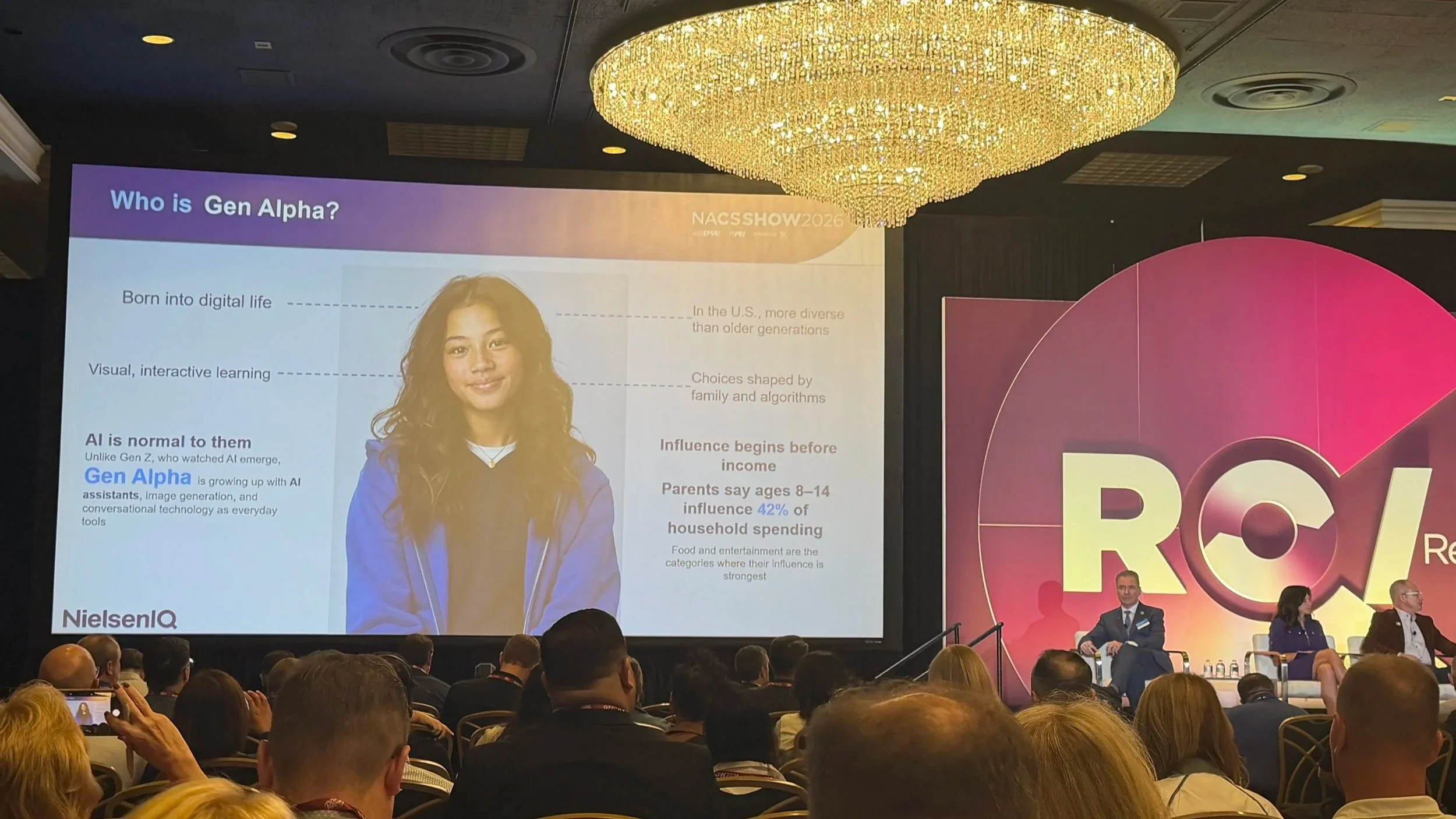
For retailers, that means thinking beyond traditional demographic labels. Younger customers expect intuitive, visual and interactive journeys, while their preferences are already shaping what families buy and where they stop. The protein trend was a vivid example: bars, drinks, smoothies, popcorn, doughnuts, meat sticks, gummies and even traditionally indulgent snacks are being reframed as functional choices.
Retailers do not need to chase every trend. But they do need formats, fixtures and merchandising systems flexible enough to test, learn and refresh quickly.
Digital should remove friction - not hospitality
Self-checkout, loyalty and mobile ordering are no longer differentiators on their own; they are expected. Their value lies in making the visit easier while allowing staff to focus on the moments where human hospitality matters most.
A strong digital experience begins before the customer arrives: accurate store information, clear food offers, easy ordering and rewards that feel personal. It must then connect seamlessly to the physical environment - clear pickup points, intuitive circulation, fast checkout and a store that feels cared for.
The store remains a community asset
Something Lonnie McQuirter, the Chairman of NACS, said has stayed with us: “We’re not just conducting transactions; we’re cultivating relationships.”
Convenience retail should never be dismissed as “just a gas station.” These stores are often open when other places are not. They serve commuters, families, night-shift workers, travelers and local communities.
For BDL Partners, the implication is clear: the next generation of convenience stores must balance speed with experience, standardisation with local relevance, and technology with genuine human connection.
The winners will not simply be the fastest stop on the route - they will be the places customers actively choose.